


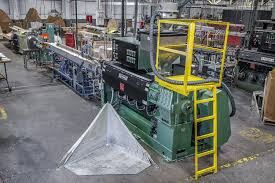
Plastic extrusion is a process that pushes material through a die, and it creates consistent shapes that are ideal for construction use. The process turns thermoplastic into long, continuous profiles that keep the same shape over long distances. Material choice, tool accuracy, and later processes affect the final properties of the extruded profiles. The following are a few innovative uses of plastic extrusion in construction and infrastructure:
Developing Custom Profiles
Complex assemblies need profiles made to exact sizes, including both simple and detailed shapes. Plastic extrusion allows these profiles to be produced repeatedly in long, continuous lengths, so they maintain the same shape from start to finish. The extrusion process determines thickness, hardness, density, color, and texture, building these features into the profile instead of adding them later. Extrusion preserves these properties throughout production runs, and it produces consistent outputs where material properties remain uniform within each profile type. Changes in these parameters generate various types of profiles constructed using the same material system.
Tubing and sleeves offer hollow shapes, and solid profiles offer dense components. Extrusion produces both types using the same process, enabling a variety of profile types without altering the manufacturing process. The process produces long continuous lengths as the main output, while cutting adjusts them into the required sizes.
Combining Multiple Materials
Plastic extrusion supports co-extrusion and tri-extrusion. This allows the process to combine two or three materials within a single cross-section, and they avoid having to add extra materials later. Dual-durometer configurations allow variation in hardness within the same extruded profile. The process allows multi-material processing to combine rigid and flexible materials within a single product design. The process can incorporate color variation within the same profile, producing different visual sections in one extruded part. Certified materials, including military-grade and UL-approved options, are available for use in extrusion, supporting defined material selection requirements within the process.
Maintaining Tight Tolerances
Dimensional accuracy is supported through tight tolerance capability within plastic extrusion processes that produce profiles to exact specifications. Extrusion tooling, including dies, forms cross-sectional geometry during production; this supports consistent profiles across production runs. Certified materials are used in production, such as optical comparators, which verify cross-sectional geometry against design specifications. Durometer gauges measure hardness levels within extruded materials, including dual-durometer profiles. Quality systems support process control and documentation; these support inspection of extruded products.
Scaling Production Capacity
Production capacity spans from prototype development through high-level manufacturing within plastic extrusion operations. The process supports both low- and high-volume production within the same extrusion capability framework. Multiple extrusion lines support different requirements and profile types within the same operation set. This manufacturing process scales output by producing different profile types and material configurations.
Solid profiles and hollow components, such as tubing and sleeves, form part of the supported output range. The same system accommodates variations in thickness, hardness, density, color, and texture across different extruded profiles; this allows production to adjust specifications without changing the extrusion method. Quick turnaround supports movement between prototype production and larger production runs within extrusion operations.
Integrating Secondary Processes
Plastic extrusion supports cutting as a secondary process applied to extruded profiles. Cutting produces defined length sections from continuous forms such as tubing, sleeves, and solid profiles. Trimming removes excess material from extruded profiles after it is formed, and smoothing refines the edges. Other processes include:
- Notching creates defined recesses in extruded sections.
- Punching forms openings in extruded profiles.
- Splicing connects extruded segments through a post-extrusion step.
- Taping involves adding surface layers to extruded profiles during finishing.
- Infrared application supports surface processing after extrusion.
- Digital printing places markings or labels on the extruded materials, such as tubing and sleeves.
Explore Plastic Extrusion Capabilities
Extrusion-based manufacturing supports the production of engineered profiles aligned with structural and regulatory requirements in construction systems. Technical capabilities across profiling, material integration, precision control, scaling, and finishing form a unified production framework. These processes support components designed for consistent performance across demanding infrastructure environments. A manufacturer helps you determine which process your product needs. By using suitable materials and updating designs to create precise applications, the manufacturers create plastic profiles that can integrate seamlessly into your project. Contact a plastic extrusion service today to align construction requirements with engineered profile production.