



1. Introduction
In today’s world, identity verification plays a critical role in almost every aspect of life. Whether you are opening a bank account, applying for a job, enrolling in an educational institution, or accessing government services, having a valid identity document is essential. However, there are situations where a person may not have access to their permanent identification document. This is where a temporary identity certificate becomes highly important.
A temporary identity certificate serves as a short-term solution for individuals who need to prove their identity while their permanent ID is unavailable. It ensures that daily activities and important processes are not interrupted due to the absence of official identification.
2. What is a Temporary Identity Certificate?
A temporary identity certificate is an official document issued by a government authority or authorized organization to confirm an individual’s identity for a limited period. It acts as a substitute for a permanent ID such as a national identity card or passport.
Unlike permanent identification documents, this certificate is only valid for a short duration. It is designed to provide immediate identity verification until the original or permanent document is issued or replaced.
3. Purpose of a Temporary Identity Certificate
The main purpose of a temporary identity certificate is to ensure continuity in personal, professional, and legal activities. Without such a document, individuals may face difficulties in completing essential tasks.
The certificate is issued for several reasons:
- To provide identity proof during emergencies
- To support individuals whose ID is lost or stolen
- To help those waiting for new or renewed identification
- To maintain smooth access to services and opportunities
This document acts as a bridge between the absence of an ID and the issuance of a permanent one.
4. Key Features of a Temporary Identity Certificate
A temporary identity certificate has several defining features that distinguish it from permanent IDs.
It is typically issued by an authorized government body and contains verified personal information. The certificate is valid only for a limited period, which may range from a few weeks to a few months.
Key characteristics include:
- Short-term validity
- Official authorization
- Verified personal data
- May include photograph and signature
- Issued quickly compared to permanent IDs
5. Information Included in the Certificate
A temporary identity certificate includes essential personal and administrative details required for identification.
Typical Information Table
| Field Name | Description |
|---|---|
| Full Name | Legal name of the individual |
| Date of Birth | Used for identity verification |
| Address | Current residential address |
| ID Reference Number | Unique identification number |
| Photograph | Visual identity confirmation |
| Issuing Authority | Name of issuing department |
| Validity Period | Start and expiry date of certificate |
These details ensure that the certificate is reliable and can be used for official purposes.
6. Who Needs a Temporary Identity Certificate?
A temporary identity certificate is useful for a wide range of individuals. It is not limited to a specific group but is issued based on need.
People who commonly require it include:
- Individuals who have lost their ID
- Citizens waiting for a new or renewed ID
- Students requiring urgent identification
- Employees applying for jobs
- Individuals involved in legal or administrative processes
This certificate ensures that such individuals can continue their activities without delays.
7. Common Situations Where It Is Used
There are several real-life situations where a temporary identity certificate becomes necessary. These situations often arise unexpectedly.
Some common examples include:
- Loss or theft of identity documents
- Expired ID cards
- Delay in processing new identification
- Emergency travel within a country
- Job or school admission requirements
In such cases, the certificate provides immediate support and prevents inconvenience.
8. How to Apply for a Temporary Identity Certificate
The application process for a temporary identity certificate is usually straightforward. Although it may vary slightly depending on the country, the general steps remain similar.
Step-by-Step Process
- Visit the relevant government office or authority
- Obtain and fill out the application form
- Attach required documents
- Submit the application for verification
- Wait for approval and issuance
The process is designed to be quick so that individuals can receive their certificate without unnecessary delays.
9. Documents Required for Application
To apply for a temporary identity certificate, certain documents are typically required. These documents help verify the applicant’s identity and background.
Common requirements include:
- Copy of previous ID (if available)
- Proof of address
- Passport-size photographs
- Completed application form
- Supporting documents (if applicable)
Providing accurate and complete documents ensures faster processing.
10. Validity and Duration
One of the most important aspects of a temporary identity certificate is its limited validity. It is not meant for long-term use.
The duration may vary depending on the issuing authority, but it is generally valid for:
- A few weeks
- One to three months
- Until the permanent ID is issued
It is important to monitor the expiry date and apply for a permanent ID in time.
11. Uses of a Temporary Identity Certificate
A temporary identity certificate can be used in many situations where identity verification is required.
It is commonly used for:
- Opening bank accounts
- Applying for jobs
- Accessing government services
- Enrolling in educational institutions
- Verifying identity in official matters
Although it may not be accepted everywhere, it is widely useful for domestic purposes.
12. Advantages of Temporary Identity Certificate
There are several benefits associated with a temporary identity certificate. These advantages make it an essential document in certain situations.
Some key benefits include:
- Provides immediate identity proof
- Helps in emergency situations
- Easy and quick to obtain
- Prevents delays in important tasks
It acts as a practical solution during times of uncertainty.
13. Limitations and Restrictions
Despite its usefulness, a temporary identity certificate has certain limitations. It cannot fully replace a permanent ID.
Some common restrictions include:
- Limited validity period
- Not accepted for international travel
- Restricted acceptance in some institutions
- Must be replaced by a permanent ID
Understanding these limitations is important to avoid inconvenience.
14. Temporary Identity Certificate vs Permanent ID
The difference between a temporary identity certificate and a permanent ID is significant. Both serve the purpose of identification but differ in scope and usage.
Comparison Table
| Feature | Temporary Identity Certificate | Permanent ID |
|---|---|---|
| Validity | Short-term | Long-term |
| Issuance Time | Quick | Longer process |
| Acceptance | Limited | Widely accepted |
| Usage Scope | Temporary needs | All official purposes |
This comparison highlights why a permanent ID is still essential.
15. Country-Specific Examples
Different countries have their own systems for issuing temporary identity certificates. While the concept remains the same, the process and format may vary.
For example:
- In Pakistan, temporary proof may be issued during CNIC processing
- In India, temporary certificates may be used in specific schemes
- In other countries, digital or paper-based formats are used
These variations depend on national policies and administrative systems.
16. Format and Design of the Certificate
A temporary identity certificate may be issued in different formats depending on the authority.
Common formats include:
- Printed paper certificate
- Card-based temporary ID
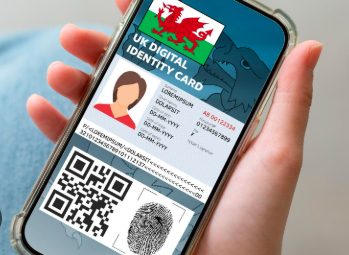
- Digital certificate (PDF or online document)
The layout typically includes personal details, official seals, and validity information.
17. Security Features
To prevent misuse and fraud, a temporary identity certificate often includes security features.
These may include:
- Official stamps and seals
- Unique serial numbers
- QR codes or barcodes
- Authorized signatures
These features ensure authenticity and reliability.
18. How to Verify a Temporary Identity Certificate
Verification is an important step to ensure that a certificate is genuine.
Methods of verification include:
- Checking issuing authority details
- Verifying serial numbers
- Using online verification systems
- Cross-checking official records
Proper verification helps prevent fraud and misuse.
19. Common Mistakes to Avoid
While applying for or using a temporary identity certificate, certain mistakes should be avoided.
These include:
- Providing incorrect information
- Submitting incomplete documents
- Ignoring expiry dates
- Using the certificate beyond its validity
Avoiding these mistakes ensures smooth usage and acceptance.
20. Frequently Asked Questions (FAQs)
1. Is a temporary identity certificate legally valid?
Yes, it is legally valid for a limited time and for specific purposes.
2. Can it replace a passport?
No, it cannot be used for international travel.
3. How long does it take to get one?
It is usually issued quickly, often within a few days.
4. Can it be renewed?
In some cases, it may be extended, but typically you must apply for a permanent ID.
5. Where is it accepted?
It is accepted in many domestic and official situations but not everywhere.
21. Conclusion
A temporary identity certificate is a valuable document that provides short-term identity verification in situations where a permanent ID is unavailable. It plays a crucial role in ensuring that individuals can continue their daily activities without interruption.
While it offers convenience and immediate support, it is not a replacement for permanent identification. Therefore, it is always important to apply for and obtain a permanent ID as soon as possible.
In summary, a temporary identity certificate is a practical and essential solution for managing identity-related challenges efficiently and effectively.